





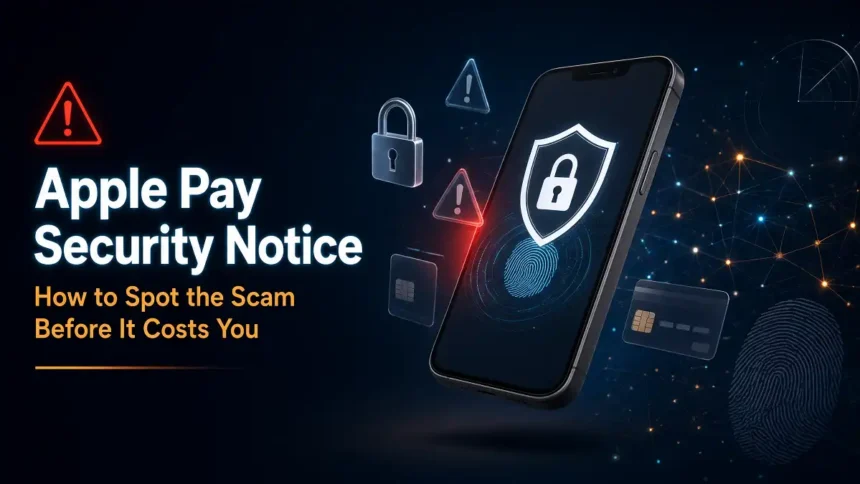
Apple Pay Security Notice Text: How to Spot the Scam Before It Costs You
→ watchOS 27: Every New Feature Coming to Apple Watch This Year
If you’ve received a text claiming your Apple Pay account flagged a suspicious charge, you’re not alone. These messages are showing up in inboxes across the country, and they’re designed to look convincing enough to make even cautious people panic. The problem is they’re not from Apple at all.
→ iPhone 16 Pro Max Price Drop: What It Actually Costs Now and Whether It’s Worth Buying
Here’s what these scam texts actually are, how they work, and exactly what you should do if one lands on your phone.
What the Message Looks Like
The typical Apple Pay security notice text arrives as an SMS or iMessage and follows a familiar script. It claims a charge somewhere between $100 and $400 has been “flagged” or “placed on hold” on your Apple Pay account. Some versions use a suspiciously specific dollar amount, like $143.95, to make the alert feel more legitimate. The message then instructs you to call a phone number listed as Apple Support to dispute the charge or verify your identity.
That number does not belong to Apple.
The specificity of the dollar amount is intentional. Scammers have found that round numbers feel fake, while oddly precise figures create the impression that a real transaction record exists somewhere. There isn’t one.
What Happens If You Call
Calling the number in the text connects you to a fake tech support center staffed by people whose entire job is to keep you scared and compliant. From there, the scam can go several directions.
The person on the line may claim your account has been compromised and ask you to download a remote access app so they can “fix” the problem. Once you grant that access, they can see everything on your screen, including banking apps, passwords, and any one-time codes that come through. Others will ask you to verify your Apple ID credentials directly, or claim the only way to reverse the fraudulent charge is to purchase gift cards and read the numbers aloud.
None of this is a legitimate support process. Apple will never ask you to call a number from a text message, download remote access software, or pay anything with gift cards.
Why These Texts Are Hard to Dismiss
This type of scam is called smishing, which is phishing carried out through SMS. The FBI has flagged smishing as a growing threat precisely because text messages feel more personal and immediate than emails. People are conditioned to act quickly on texts, and scammers exploit that reflex.
The Apple branding makes it worse. Apple Pay is a widely trusted payment platform, and a message suggesting your account was used without your permission hits a real fear. The urgency baked into the language, words like “flagged,” “on hold,” and “act immediately,” is calculated to short-circuit the pause that would normally make you question the message.
How to Tell It’s a Scam
A few quick checks will tell you everything you need to know.
The sender isn’t an Apple domain. Legitimate Apple communications come from apple.com addresses or verified short codes. A random phone number or string of digits is a red flag immediately.
Apple doesn’t ask you to call a number from a text. If Apple ever needs to reach you about account activity, you can verify it yourself by going directly to appleid.apple.com or checking your device’s settings.
The charge doesn’t appear in your actual purchase history. Before doing anything else, open your Wallet app or check your Apple ID purchase history. If the transaction the text describes isn’t there, the text is fabricated.
Urgency and fear are the tools. Any message that pressures you to act within minutes or threatens account suspension is designed to stop you from thinking clearly.
What to Do If You Got One
If the text is sitting in your inbox and you haven’t responded, delete it. You can also report it by forwarding the message to 7726 (SPAM), which is the carrier reporting shortcut in the US.
If you called the number but didn’t share any information, you’re likely fine. Change your Apple ID password as a precaution and enable two-factor authentication if it isn’t already on.
If you gave out personal details, shared a one-time code, or allowed remote access to your device, act quickly. Change your Apple ID password and any other passwords that may have been visible. Contact your bank if financial information was shared. File a report with the FTC at reportfraud.ftc.gov, and if you gave remote access, treat your device as potentially compromised and consider having it reviewed by a technician.
The scam works because it moves fast. Slowing down for thirty seconds to check your actual account is usually all it takes to see through it.
Relevant posts
- Fix iPhone Not Connecting to Wi-Fi
- How to Use Sora AI for Free on iOS
- How to Fix WhatsApp Notifications Not Working on iPhone
Visit consideringapple.com for more stories.