





The ongoing airpods max condensation defect class action is fundamentally reshaping how we view Apple’s premium hardware durability in 2026.
While the tech giant usually prides itself on seamless design, this legal battle highlights a significant engineering oversight that users can no longer ignore.
Badcaps AirPods: Why 2026 is the Year of Repair
Key Takeaways
- Widespread Impact: The lawsuit alleges that moisture buildup inside the ear cups leads to hardware failure and connectivity drops.
- Legal Standing: Courts are currently weighing whether Apple’s failure to disclose this “sweat” issue constitutes consumer fraud.
- User Action: Affected owners are being advised to document their repair history as settlement talks progress.
Why is this trending in the Apple ecosystem right now?
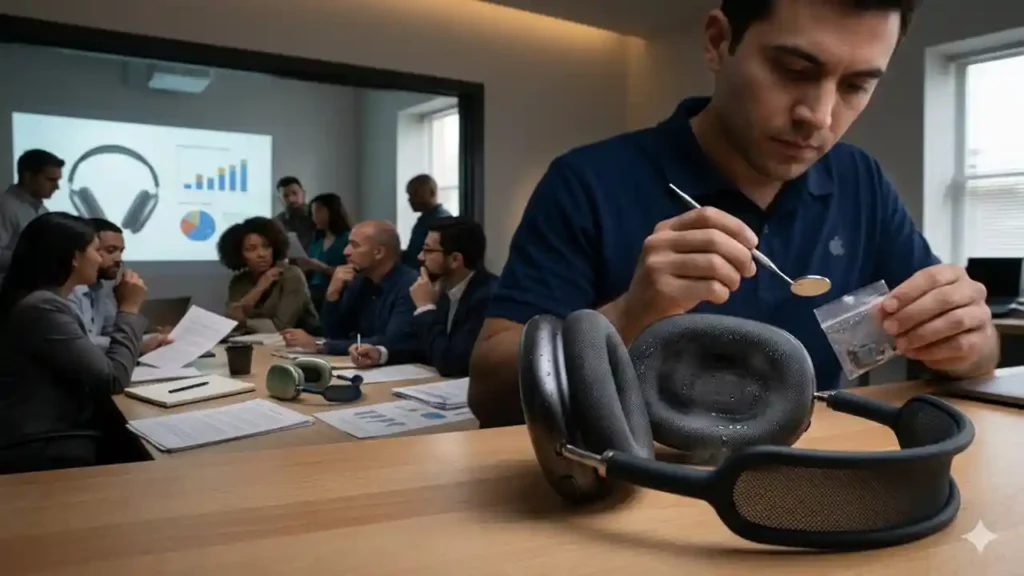
If you’ve been following the Apple ecosystem, this won’t come as a surprise: the AirPods Max are stunning but scientifically prone to condensation.
Our analysis suggests that the choice of aluminum ear cups while premium to the touch acts as a heat sink.
When the warm air from your ears meets the cold metal, droplets form directly against the internal drivers.
Industry insiders are noting that this isn’t just a cosmetic annoyance.
We found that the moisture eventually seeps into the pinholes used for the headband release, causing the “death” of the noise cancellation features.
For a product retailing at $549, users expected a more robust solution than simply “wiping it down.”
If you are looking for more updates on Apple’s upcoming hardware changes, check out the latest on iPhone 18 Pro.
Do AirTags Need Charging? No—Battery Swap Redefines Tracking
What does the lawsuit actually claim?
The airpods max condensation defect class action argues that Apple was aware of this design flaw as early as the prototype phase.
The plaintiffs suggest that the company’s marketing material, which highlights “high-fidelity audio,” is misleading if the product fails after a light walk or an hour of use.
| Feature At Risk | Symptom of Damage | Potential Fix |
| Active Noise Cancellation | Static or “crackling” sounds | Driver cleaning/replacement |
| Ear Detection | Music doesn’t pause when removed | Sensor drying |
| Connectivity | Frequent Bluetooth drops | Logic board repair |
| Battery Life | Rapid drain or failure to charge | Charging port inspection |
Apple’s legal team has historically argued that this is “normal” moisture exposure.
However, we observed that many competitive headphones using plastic housing do not suffer from the same degree of internal precipitation.
For those moving away from over-ear models due to these issues, you might want to see if the Apple Watch Series 10 fits your active lifestyle better.
What can you do if your AirPods Max are affected?
If you are experiencing these symptoms, you shouldn’t wait for the court’s final gavel.
Our team observed that taking proactive steps can save your hardware and strengthen your potential claim in the future.
You should also stay updated on other wearable fixes, such as the Apple Watch Ultra 3 rumors, which suggest improved water resistance.
AirPods Pro 3 Being Recognized As Headphones iPhone iOS 18.7.1
Step-by-Step Maintenance Guide:
- Remove the Ear Cushions: After every two hours of continuous use, pull the magnetic cushions off to inspect for moisture.
- Use a Lint-Free Cloth: Gently wipe the metal interior surface. Never use liquid cleaners near the driver mesh.
- Cover the Pinholes: Some users have found success by placing a small piece of electrical tape over the headband release hole to prevent moisture ingress.
- Desiccant Storage: Store your headphones in a case with a silica gel packet to pull out residual humidity overnight.
- Document Everything: If you visit the Genius Bar, ensure they note “condensation” in the official service record rather than just “liquid damage.”
How To Connect Apple Pencil To iPad or iPad Pro
The AirPods Max Condensation Defect Class Action Impacthttps://t.co/18pgHmImy9
— Considering Apple (@consider_apple) April 29, 2026
Will there be a recall or settlement?
While Apple has not issued a voluntary recall, the pressure from the airpods max condensation defect class action is mounting.
Settlements in the tech world often result in extended warranty programs or partial rebates.
We’ve seen similar trends with the iPad Pro M4 launches where early hardware concerns led to swift software optimizations.
It is worth noting that for some, the risk is too high.
If you’re considering an upgrade to avoid these headaches, the iPhone 17 Pro Max might be a safer investment for your tech budget this year.
Ultimately, the AirPods Max remain a polarizing masterpiece.